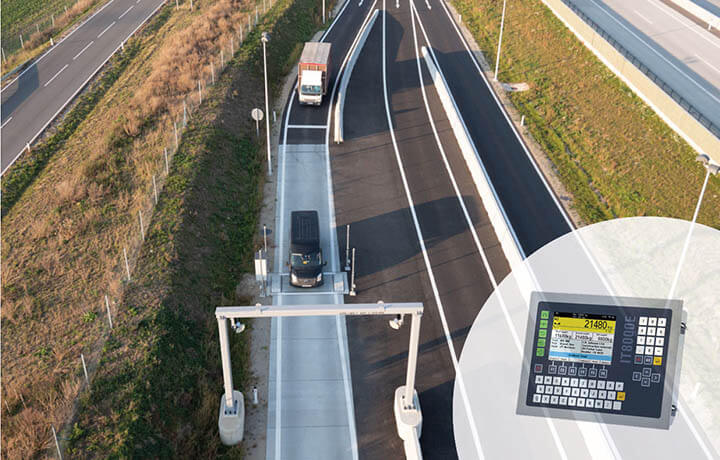

Weigh-in-Motion: Legally Compliant Dynamic Truck Weight Inspection System
SysTec Supplies Weighing Controllers and Software for the Rur-Scholle-Süd Weigh-in-Motion Project
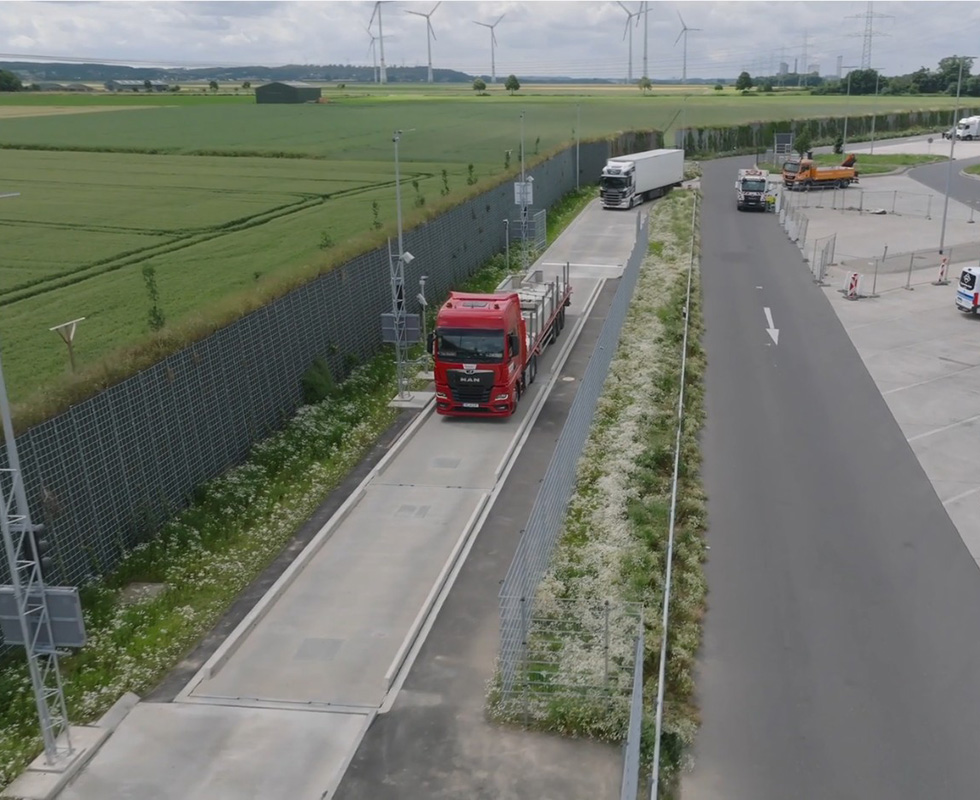
SysTec weighing controllers and software are being used at the dynamic truck weight inspection station on a German highway. The new weigh-in-motion system is located at the Rur-Scholle-Süd rest area on the A4 highway and sets new standards for protecting transportation infrastructure. The goal of the pilot project is to detect overloaded trucks and inspect them in compliance with legal requirements — without unnecessarily disrupting traffic flow.
The dynamic weighing system was implemented by SysTec's partner Waagenbau Dohmen GmbH. Key components of the weighing solution include the W&M approved SysTec weighing controllers (IT8000E and IT1) and SysTec software solutions. They ensure legally compliant weight recording, precise processing of measurement data, and seamless integration into Autobahn GmbH’s* digital weight control system.
The pilot project on the A4 is the first of a total of 16 planned weigh-in-motion systems that Autobahn GmbH and the BALM (Federal Office for Logistics and Mobility) have planned. These control systems are to be implemented throughout Germany in the coming years.
*Autobahn GmbH is Germany’s federally owned highway administration company.
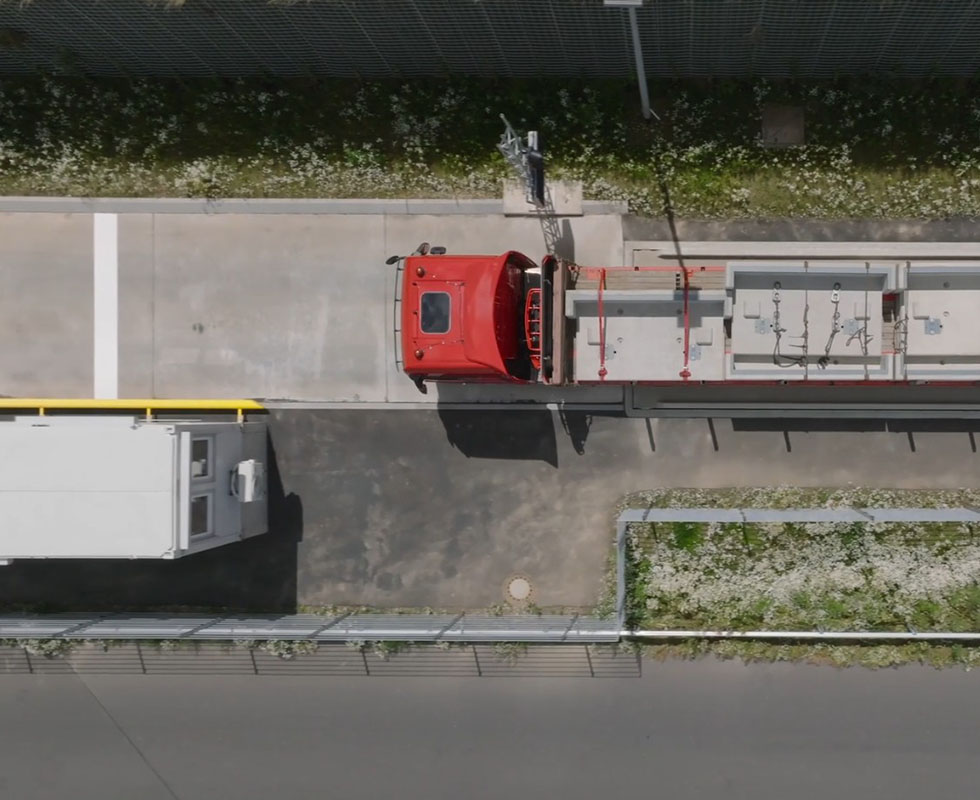
Dynamic Weight Control for Trucks
© Picture: Autobahn GmbH
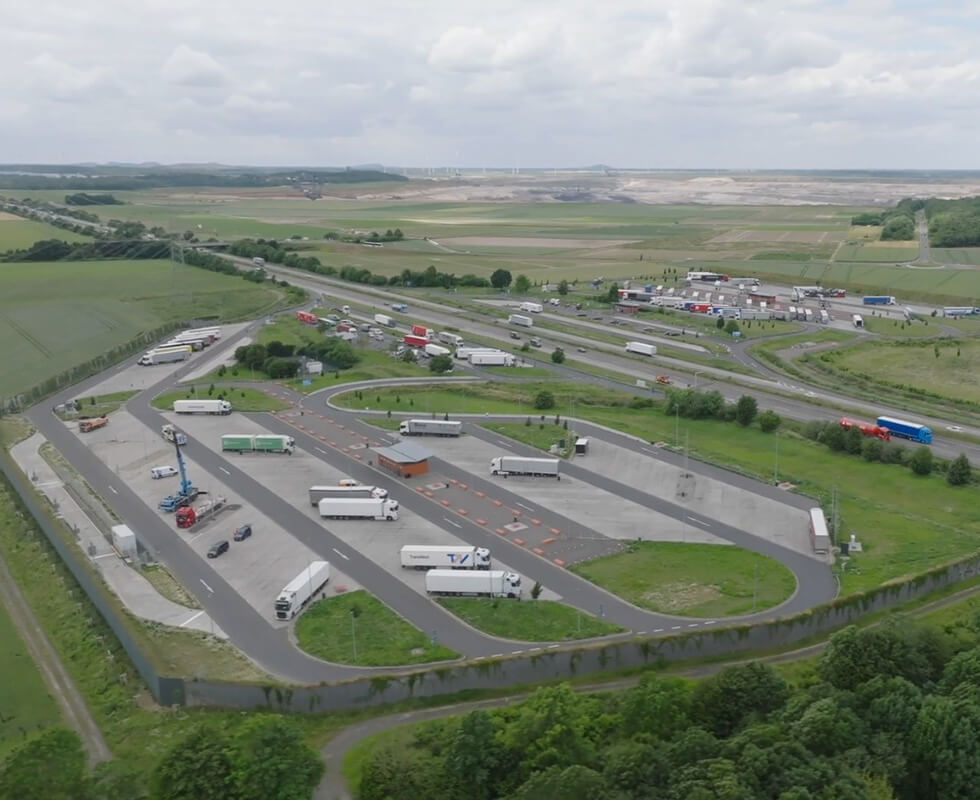
Rur-Scholle-Süd, Germany - Pilot Project
© Picture: Autobahn GmbH
Key Facts About the Weigh-in-Motion Project
- What type of scale was used? A 41-meter-long scale combination consisting of three individual scales with two operating modes was used, allowing both dynamic and static weighing of trucks.
- How does the weigh-in-motion process work? Trucks are preselected in moving traffic, and their license plates are recorded. Overweight trucks are directed to the rest area via an LED display. There, they undergo a legally compliant dynamic weighing process. Static weighing is also possible for shifting loads, such as livestock transport. If a vehicle exceeds the legal weight limit, enforcement action is taken.
- Which metrological standard is the scale approved under? The dynamic axle load scale is approved in accordance with the OIML R134 standard by SysTec partner Waagenbau Dohmen GmbH.
- Maximum weight? The scale is designed for vehicles up to 70 metric tons.
- Pass-over speed? The permissible drive-over speed is 5–12 km/h.
- Precision? Accuracy class 2 (with respect to gross weight) and accuracy class E for axle groups.
- What is weigh-in-motion, and what makes this project unique? Weigh-in-motion refers to the process of determining a vehicle’s weight while it is in motion. This allows the total weight, axle loads, and speed to be recorded without the vehicle having to stop. What makes this project unique is that the weighing process is legally compliant and that measurement deviations—which can occur, for example, due to environmental influences—are reliably detected.
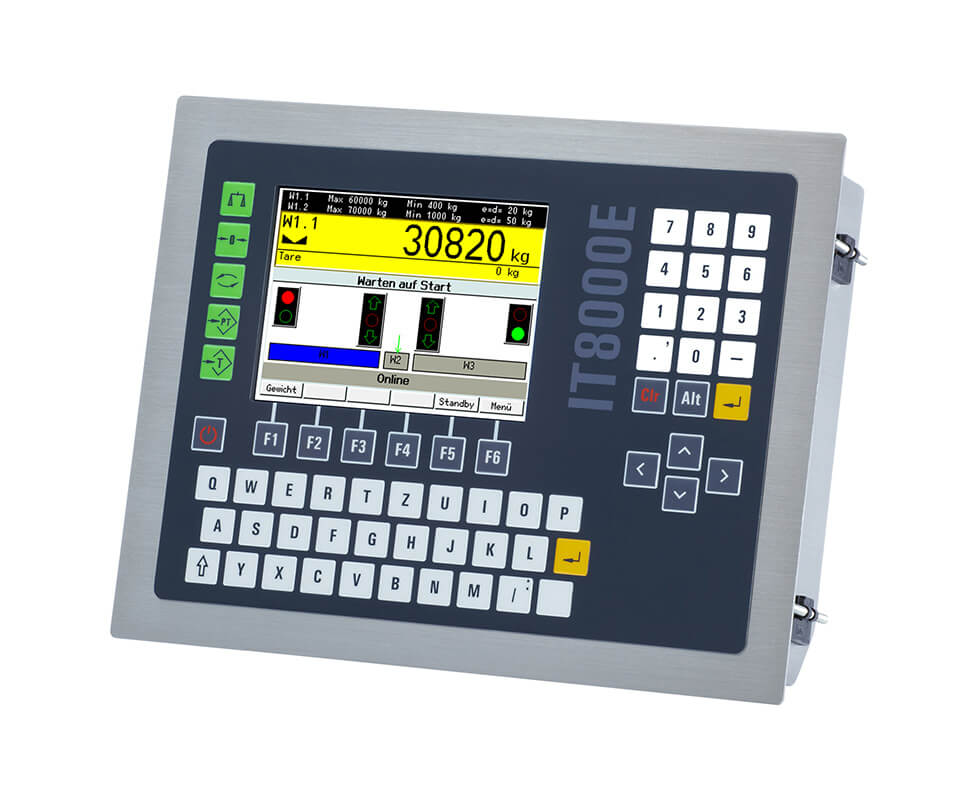
SysTec IT8000E weighing controller
SysTec IT8000E weighing controllerWhich Products Are in Use?
- SysTec IT8000E weighing controller - serves as host and performs data analysis
- Multiple SysTec IT1 weighing indicators for rapid weight determination
- Furthermore, a SysTec IT8000E weighing controller is also used for axle spacing detection
- Software: The SysTec RTC WIN development platform for implementing customer-specific workflows
The Challenge
Every day, thousands of trucks travel on Germany’s highways. Many bridges and roadways were originally designed for significantly lower traffic and axle loads than what are common today. The A4 highway, in particular, is one of Europe’s most important freight transport routes. A large portion of the traffic from the ports of Rotterdam and Antwerp travels via the A4 and the Eifeltor Bridge, which was not originally designed to handle these loads. Overloaded trucks cause damage to the infrastructure, shorten the service life of bridges and roads, and simultaneously increase the risk of accidents due to longer braking distances and altered driving dynamics.
Until now, overloading could only be checked on a random basis. Selecting vehicles was a time-consuming process that required significant staff resources, resulting in two to three inspection weighings per day. With the new digital weight-checking system, Autobahn GmbH and BALM are therefore adopting a new approach: Overloaded trucks are to be automatically detected, specifically diverted, and then weighed in compliance with legal requirements. This allows for weigh-ins every minute.

How Does the Weighing Solution Work?
The weight inspection station operates using a two-stage inspection process. Several kilometers before the inspection point at the Rur-Scholle-Süd rest area, sensors embedded in the roadway detect all trucks in moving traffic and determine their weight values (at this first stage, the weight control is not yet legally compliant). Suspicious vehicles are automatically identified at this stage. The measurement in moving traffic serves exclusively for preliminary screening.
In the next step, an automatic video license plate recognition system assigns the measurement data to the respective vehicle. LED display boards direct the affected truck specifically to the rest area.
Finally, at the inspection station, the legally compliant dynamic truck weighing takes place using a combination of vehicle scales based on SysTec weighing electronics. Only this W&M approved weighing provides the legal basis for regulatory measures such as fines, transshipments, or driving bans.
The Weighing System with SysTec Weighing Technology
The weighing system consists of three combined truck scales. Two weighbridges, each approximately 20 meters long, are supplemented by an axle load scale approximately 80 centimeters long. Beneath this axle load scale is an additional measuring device that determines the position of the wheel center during the drive-through. This allows the actual axle position to be determined precisely and further increases measurement accuracy.
The central evaluation electronics consist of the SysTec IT8000E weighing controller. It processes all measurement data from the connected scales. Several independent SysTec weighing systems handle the fast and highly precise weight determination for each individual scale as well as the recording of axle spacings.
The combination of multiple independent scales enables particularly reliable weight determination. At the same time, the system automatically recognizes different vehicle and axle combinations based on the axle distances and correctly assigns the measured values.
The system is supplemented by custom-developed PC software from Dohmen. This software enables communication and visualization with the higher-level BALM system.
The scale combination supports two operating modes: dynamic and static. Weighing is performed dynamically during a slow pass at a speed of approximately 5 to 12 km/h. For vehicles with shifting loads—such as tanker trucks or livestock transporters—static weighing can be performed alternatively to ensure the highest possible measurement accuracy even under these conditions. The system is designed for vehicle weights up to 70 metric tons.
SysTec IT8000E weighing controller for weigh-in-motion system
SysTec IT8000E weighing controller for weigh-in-motion systemLegally Compliant Weight Determination
Since the measurement results form the basis for regulatory actions, the highest standards of accuracy and traceability apply. The weighing system meets the requirements of the international recommendation OIML R134 for automatic road vehicle scales. It achieves accuracy class 2 for gross weight and accuracy class E for axle groups.
The Special Feature: Reliably Detecting Measurement Deviations
In dynamic vehicle weighing, measurement deviations can arise from intentional or unintentional driving behavior as well as from external influences. For example, braking and acceleration maneuvers or environmental factors can affect the measured vehicle weight. The W&M approved weighing system at the Rur-Scholle-Süd pilot station reliably detects these influences.
A key feature of the solution is redundant weight determination. The total weight and axle load weights are calculated using multiple independent measurement systems and cross-validated against one another. This multilayer verification enhances measurement reliability and ensures legally compliant weight determinations during regulatory inspections.
Advantages of the Weigh-in-Motion System
- Automated truck preselection without disrupting the flow of traffic
- Legally compliant verification weighing in accordance with OIML R134
- Dynamic and static operating modes in a single weighing system
- Secure and precise weight determination through a three-scale concept
- Automatic detection of axle spacing and vehicle configurations
- Integrated reference scale for legal verifications


Outlook
The pilot system at Rur-Scholle-Süd marks the first automated weight control station of its kind in Germany. The experience gained there will form the basis for the nationwide expansion of additional legally compliant Weigh-in-Motion systems. A total of 16 weight control stations are initially planned to more efficiently detect overloaded trucks in the future, increase traffic safety, and sustainably extend the service life of bridges and roadways.
With a combination of high-precision weighing technology, powerful evaluation electronics, and custom software, SysTec and Dohmen are making a decisive contribution to modern, digital, and legally compliant weight control on the German highway network.